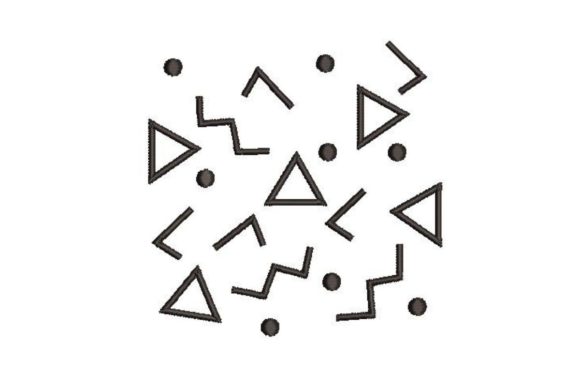
Retro Black and White Shapes for Business Branding
As an embroidery designer working with small businesses every day, my first look at Retro Black and White Shapes is always from a branding perspective. When a café, boutique, or creative studio wants to elevate their merchandise, a design needs to function as more than just decoration; it becomes a visual handshake with their customers. This design, with its straightforward title and description promising a well-digitized and cheerful touch, immediately strikes a professional yet friendly tone. The classic black and white palette suggests a modern, clean aesthetic that can lean either playful or elegant depending on its application, making it a versatile asset for a wide range of brands.
Visual Personality and Brand Identity Impact
The inherent “retro” suggestion in the name brings a certain charm and approachability. For a handmade shop or a local bakery, this can reinforce a sense of craft and authenticity. For a more modern studio or pet brand, the geometric shapes offer a bold, graphic quality that feels current and confident. Using Retro Black and White Shapes on staff uniforms or aprons instantly communicates a cohesive brand identity. It signals to customers that there is attention to detail and a pride in presentation, which builds trust and enhances perceived value. A simple, well-executed embroidered patch on a tote bag or work shirt becomes a mark of professionalism, turning everyday items into branded merchandise that encourages customer engagement and recognition.
Real-World Applications for Small Business Merch
The true test of any machine embroidery design is how it performs across the spectrum of real business use. Here’s where Retro Black and White Shapes shows its potential.
Embroidered Patches and Product Labels
For creating custom patches for uniforms, event merch, or as add-ons to boutique products, this design’s clean geometry is ideal. It can serve as a chest logo accent on polo shirts, a sleeve detail on jackets, or a standalone patch on denim or canvas. Its simplicity means it can scale down effectively for smaller patch sizes, perfect for a subtle yet distinctive mark on product packaging or as a label for a handmade product. For an Etsy seller or craft business, using this as a branded patch on tote bags or caps creates a consistent, professional look across all customer-facing items.
Apparel and Accessory Embroidery
The description notes it is easy to embroider, which is critical for production efficiency. For apparel decorators running batches of staff uniforms or customer gifts, a reliable digital embroidery file saves time and ensures quality consistency. Applying Retro Black and White Shapes to cap fronts, apron bibs, or the front of a work shirt offers a cheerful, branded touch. On a tote bag, it acts as a durable, stylish mark. The black and white thread colors guarantee high contrast, making the design pop on both light and dark fabrics, which is essential for businesses with varied uniform colors.
Commercial Embroidery Projects
For merch creators and product designers, this design acts as a flexible design asset. It can be incorporated into larger layouts or used alone for a crisp, graphic statement. Creating printable mockups for client approval using this design is straightforward because its visual impact is clear and uncluttered. Whether for a florist’s team aprons, a pet brand’s leash bags, or a creative studio’s client gifts, it adds value without overwhelming the finished product.
Practical Considerations and Designer Notes
While the product description highlights good digitization and ease of use, practical experience dictates a few essential checks before committing to a production run for any business.
Always test first. Run the embroidery file on the actual fabric you plan to use—be it apron cotton, cap mesh, or tote bag canvas. Check its performance at the intended size, especially for small patch applications or on curved surfaces like cap fronts. Inspect the stitch density and spacing; a well-digitized design should have clean outlines without excessive thread buildup that can distort on textured fabric.
Use the proper stabilizer for the fabric weight and item type. A tote bag needs different support than a lightweight staff shirt. This ensures the design remains crisp after frequent washing, which is crucial for uniforms and reusable merchandise.
Confirm commercial licensing. The description states it comes with multiple embroidery file formats and can be used for creative projects, but for any business application—on uniforms, merchandise for sale, or branded products—you must verify the license terms explicitly allows commercial use. Never assume.
Create a real mockup. Compare Retro Black and White Shapes beside your other brand assets. Does it complement your logo? Does it maintain visual consistency? Seeing it on a physical hat or bag is more valuable than any screen preview.
Where to Use with Care
Even with a robust design, certain applications require extra attention. For very small patch sizes, ensure the shapes remain distinct and do not blur into a single mass. On dark uniform fabrics, while white thread will contrast well, test for potential show-through of the stabilizer or backing. On items with high wear-and-tear like work shirts that need frequent laundering, a simpler design like this is advantageous, but always follow best practices for thread and stabilization to ensure longevity. Avoid using it in areas with tiny, intricate lettering unless the design specifically includes such elements; its strength is in its graphic shapes.
Final Thoughts for Business Owners
Retro Black and White Shapes presents itself as a trustworthy, versatile machine embroidery design. From my perspective as a designer servicing small businesses, its value lies in its adaptability. It can elevate a simple apron into a branded uniform, transform a plain tote into boutique merchandise, and add a layer of polished professionalism to a handmade brand’s presentation. Its cheerful, clean aesthetic supports a wide range of brand personalities. By performing due diligence—testing, verifying licensing, and integrating it thoughtfully into your overall visual identity—this design can become a reliable, effective component of your commercial embroidery projects, helping you create custom apparel and products that resonate with your customers and reinforce your business identity every single stitch.